

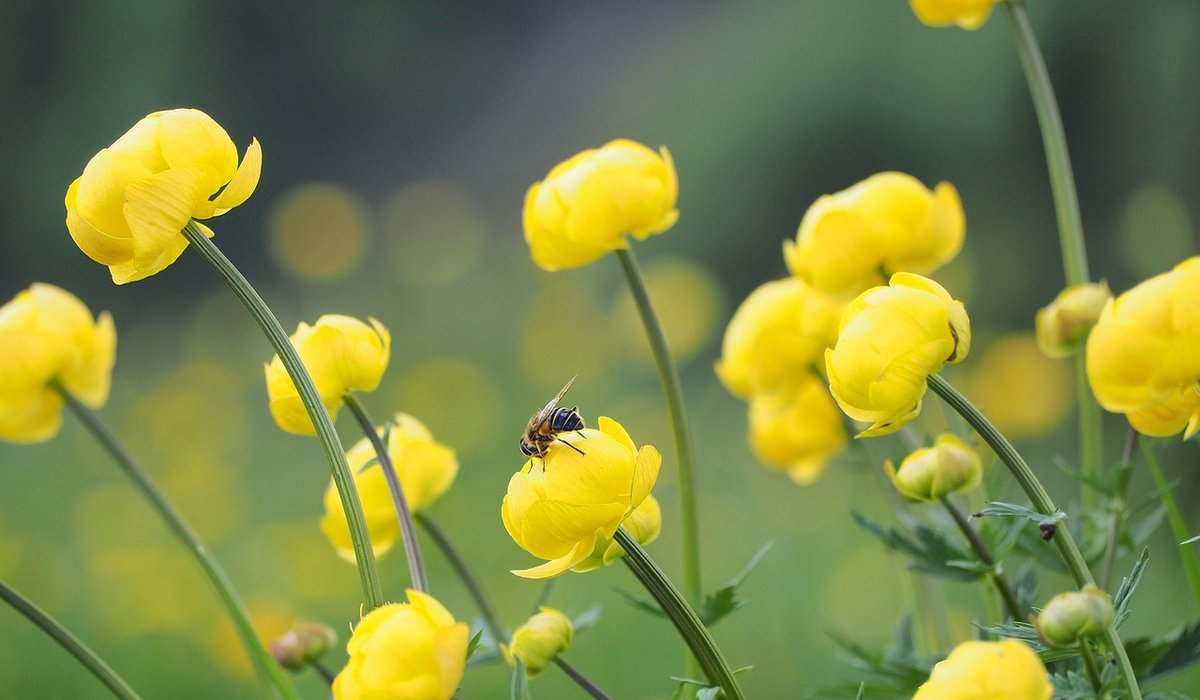
Autumn is the meadow's quiet turning point
Wildflower meadows are often described as summer gardens, but the real work happens once the flowers have set seed and the grass begins to slump. Autumn is when a meadow either strengthens or quietly thins out. The light is lower, the soil is still warm, and there is just enough growing season left for newly sown seed and young plug plants to root before the cold arrives. Get the next few weeks right and you will be rewarded with a denser, more generous sward next June.
It also helps to remember that a meadow is not a lawn left to its own devices. It is a managed habitat, and most of that management falls between September and November.
Cut, clear and take the hay away
If you have not already done so, cut your main meadow now. Aim for a height of about 5–10cm — low enough to let light reach the rosettes below, high enough to spare any late basking insects and small mammals. Leave the cuttings lying for two or three days so that any remaining seed drops back onto the ground, then rake them off completely.
This is the single most important autumn job, because every handful of cut grass you remove is a handful of nutrients taken out of the soil. Wildflowers evolved on poor, unimproved ground; if fertility builds up, vigorous grasses and nettles take over and your ox-eye daisies, knapweed and field scabious fade away.
- Never compost cuttings on the meadow itself — use a separate heap or take them to a green waste collection.
- On richer ground, consider a second cut in early autumn to reduce fertility further.
- Rake gently rather than scrubbing, so you create small gaps for seed without tearing up the sward.
- Leave any ant mounds, tussocks and mossy patches alone.
Sow yellow rattle and hardy wildflower seed
Yellow rattle is the meadow-maker, and it needs cold to germinate well. Sow fresh seed between September and November onto ground you have scarified with a rake — aim for roughly half a gram to a gram per square metre in a fine, open tilth. It will not work on a thick, matted sward, so scarify firmly and press the seed in with a board or by treading it gently.
Alongside it you can sow a general wildflower mix suited to your soil. On heavy clay, favour betony, great burnet and meadow buttercup. On light, free-draining ground, go for wild carrot, field scabious and bird's-foot trefoil. If your ground sits wet in winter, ragged robin, meadowsweet and purple loosestrife will settle in happily.
Plug plants are also excellent now and often more reliable than seed in a small garden meadow. Plant them at roughly five to seven plugs per square metre, water them in, and keep the grass around them short until they have knitted into the soil.
Check drainage and deal with compaction
Autumn rain quickly reveals where a meadow is holding water. Walk it after a downpour and look for standing puddles, ruts from mowers or footfall, and patches where moss has taken hold. These are usually signs of compacted or poorly drained soil, and they tend to spread if ignored.
- Fork over compacted patches — 15–20cm deep, working backwards and leaving the surface crumbly rather than smooth.
- Open up any silted-up ditch edges or shallow channels so winter water can move away.
- Keep off the meadow with machinery when the ground is soft; ruts create permanent hollows where docks and thistles thrive.
- If a wet hollow persists, plant damp-loving species into it instead of fighting the conditions.
Do not be tempted to improve poor drainage by spreading compost or topsoil. It will feed the grasses and undo years of careful management.
Leave space for overwintering wildlife
A tidy meadow is not always a wildlife-friendly one. Seed heads left standing through winter feed goldfinches, linnets and tits, while hollow stems shelter overwintering invertebrates. Leave at least a third of your meadow uncut, particularly along hedges and fence lines, and let the tussocky edges grow long.
Small additions make a real difference: a loose pile of logs in a shady corner, some stacked stones, or a bundle of hollow canes tied and hung in a sheltered spot. Frogs, slow worms, hedgehogs and queen bumblebees will all make use of them. If you have a pond or boggy corner, clear a little vegetation from the surface now, but leave the margins undisturbed.
Manage hedges, edges and troublesome plants
Hedges are best cut in late winter once the berries have gone, and never between March and August, when nesting birds are protected by law. If yours is looking leggy, autumn is a good time to plan the work and to clear brambles or ivy from the base so that ground flora can return.
Docks, creeping thistle and ragwort spread quickly from seed and root fragments. Dig them out with a fork, getting as much of the root as you can, and do it before they set seed. Cutting alone rarely finishes the job — persistence over two or three seasons does.
Finally, walk your meadow on a bright October morning and simply look. Note the bare patches, the wet corners and the plants that have done well. Next year's plan starts right there.


Coding is used in almost all aspects of life and work now, be it directly or indirectly. It’s not just for companies in the tech sector. “An increasing number of businesses rely on computer code,
Coding is used in almost all aspects of life and work now, be it directly or indirectly. It’s not just for companies in the tech sector. “An increasing number of businesses rely on computer code,
Coding is used in almost all aspects of life and work now, be it directly or indirectly. It’s not just for companies in the tech sector. “An increasing number of businesses rely on computer code,